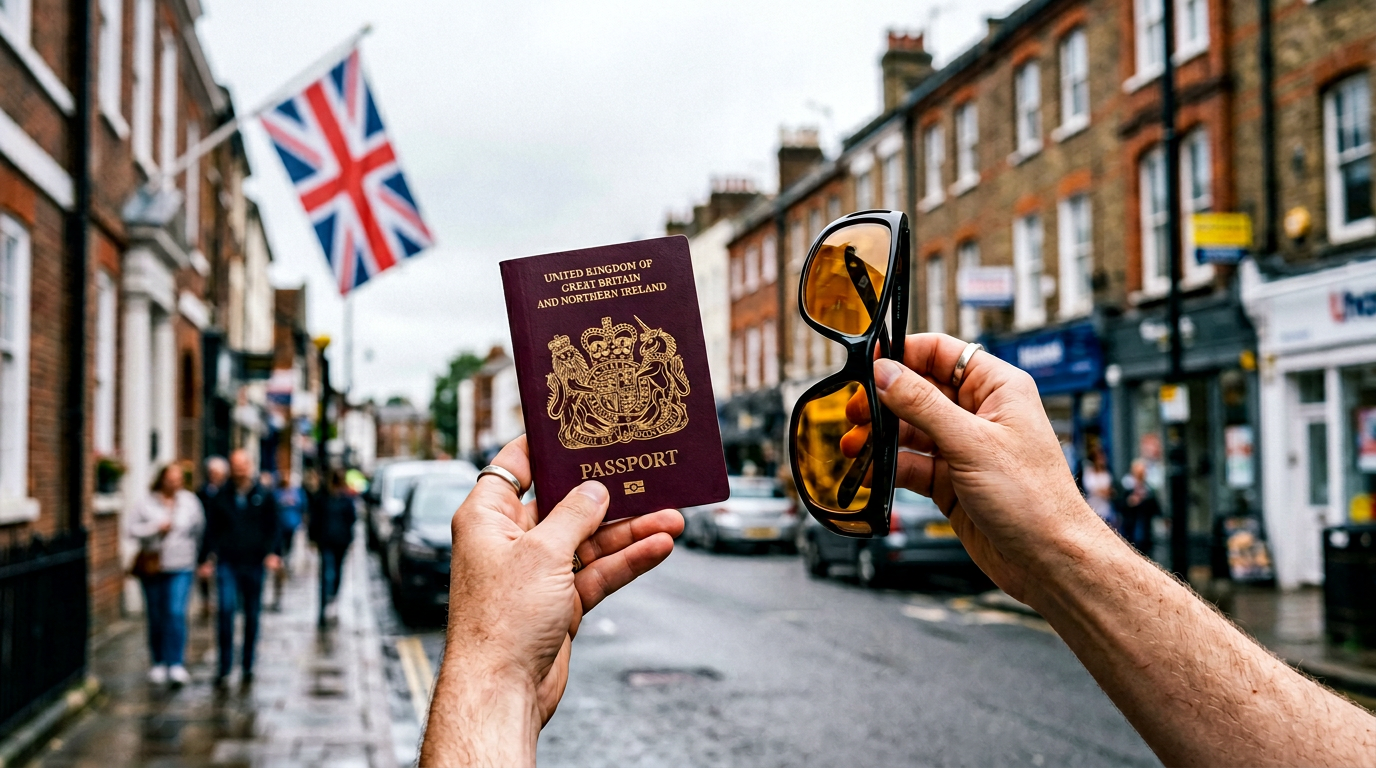
If you drive regularly after dark in Britain, you know exactly what I mean. The A-roads without working streetlights. The country lane where hedges funnel every approaching vehicle's headlights straight into your eyes. The motorway in November drizzle, where spray turns every beam of light into a blinding smear across your windscreen.
I've been driving for over 25 years. I thought I'd simply come to terms with all of it. Then a colleague mentioned he'd started using a pair of specialist night-vision driving glasses — and said the difference was, in his words, "like turning the brightness down on a screen that's been on maximum your whole life."
I was sceptical. Very. But I borrowed his pair for an evening drive along the A34, and I need to be honest with you: I ordered my own the following morning.
Research shows that nearly 80% of UK drivers have experienced visual discomfort, glare, or eye strain while driving in the dark or in heavy rain. Studies also indicate that driving at night increases accident risk by up to three times compared with daylight conditions — yet the most common "solution" remains squinting and hoping for the best.
The technology behind VisionDrive — and why it's inspired by owls
The glasses are called VisionDrive, developed by a team of German optical engineers who spent five years studying the extraordinary visual system of owls — creatures that see with perfect clarity in near-total darkness.
The reason owls can do this is partly down to a reflective layer behind the retina called the tapetum lucidum, which bounces light back across the retina for a second pass. Their eyes can gather up to 100 times more light than the human eye, effectively recycling every available photon. The result is sharp, high-contrast vision even where we would see nothing at all.
The VisionDrive engineers applied this thinking to an optical lens: not night-vision electronics, not battery-powered amplifiers — but a precisely engineered passive lens that filters harsh, scattered light while enhancing the contrast and depth perception that human eyes use to navigate in low-light conditions.
After five years of prototyping and testing, they produced a lens that drivers describe as remarkable. The chief engineer behind the project explained their goal simply:
What VisionDrive actually does — key features
- Improves night visibility by up to 92% — enhances contrast and depth perception in darkness, rain, fog and spray
- Reduces oncoming headlight glare — modern LED and xenon headlights are visibly softened without reducing your overall field of vision
- Cuts visual fatigue on long night drives — reduces the constant squinting and light adjustment that exhausts your eyes over a long journey
- Works in wet weather and road spray — the optical coating manages scattered light from wet tarmac and rainfall
- Fits comfortably over prescription glasses — the frame is engineered to sit cleanly over standard spectacle frames without pinching or distortion
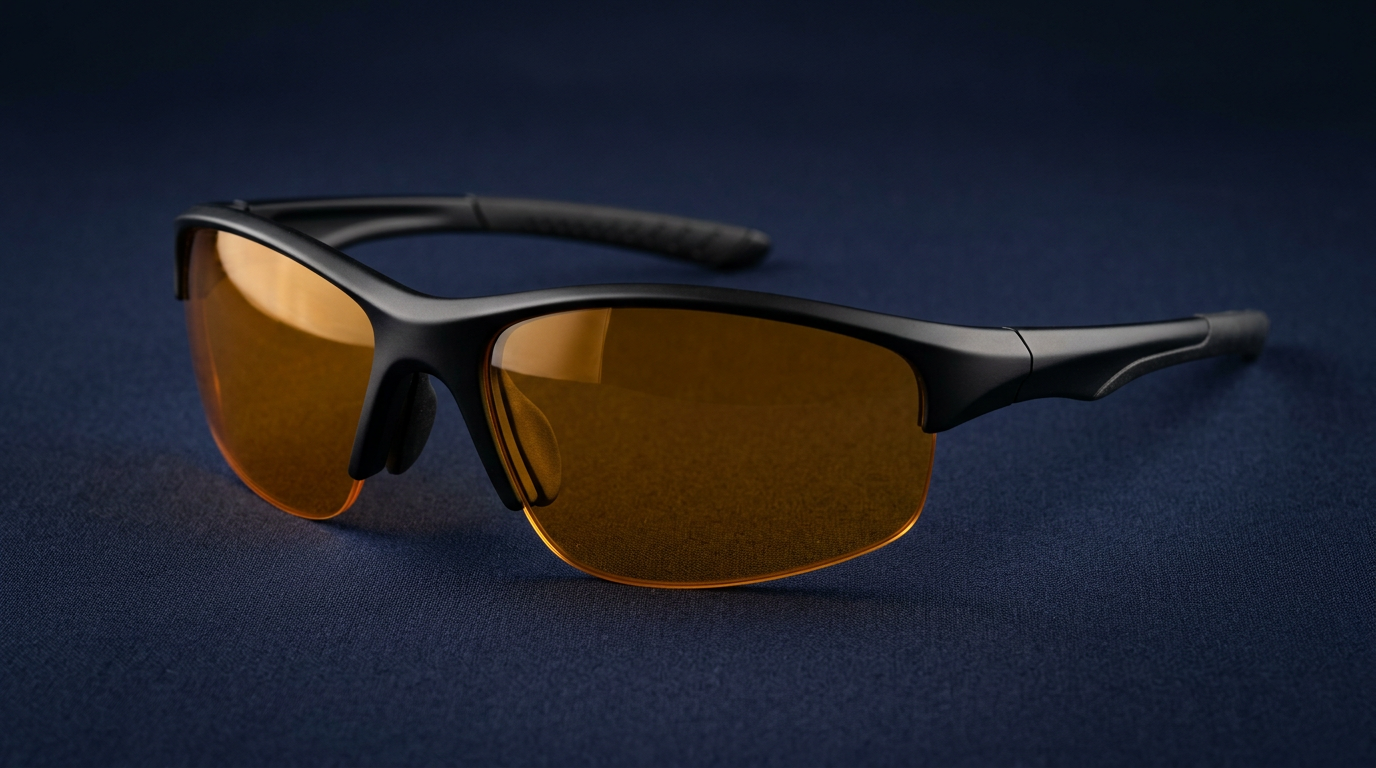
VisionDrive anti-glare night-vision glasses — amber lens, lightweight wraparound frame, fits over prescription specs.
Compatible with prescription glasses
This is the detail that finally convinced me to try them. I've worn prescription glasses for distance since my early forties. Every pair of "driving tints" or clip-on lenses I'd tried either required replacing my existing frames or wobbled distractingly while driving. VisionDrive sits cleanly over my regular frames with no adjustment required.
Drivers with astigmatism report the biggest improvements — astigmatism dramatically increases light scattering and halo effects at night, and VisionDrive appears to address this directly. The frame itself is understated and light: wraparound without looking clinical or gadget-heavy.
My honest experience on British roads
Over six weeks I've used VisionDrive across a range of UK driving conditions: the M6 at night in light rain, unlit country roads in Cheshire, and urban driving through Manchester city centre where streetlights and shop fronts compete aggressively for your attention.
The improvement is most notable in three specific situations: (1) oncoming vehicles that haven't dipped their headlights, (2) wet motorway driving with spray and haloed lights, and (3) unlit rural roads where the contrast between road surface and verge is extremely low. In all three, the glasses make a genuine and measurable difference to both comfort and confidence.
I want to be clear: they are not a substitute for sensible driving. If conditions genuinely require you to slow down, slow down. What VisionDrive does is remove the specific strain of modern over-bright road lighting — which, on a wet Wednesday evening on the M62, is worth more than I expected.
What other UK drivers are saying
I do the A1 twice a week between Leeds and Newcastle and the HGV spray in the dark is genuinely terrifying. These glasses have made the journey feel manageable again. Sceptical at first — completely converted now.
I have astigmatism and night driving was becoming something I dreaded. The halos around every light were exhausting. With VisionDrive the difference is enormous — I don't arrive home with a headache anymore. Fits perfectly over my prescription glasses too.
Wasn't sure about spending £50 on driving glasses. After the first night drive I stopped thinking about the price. The difference in oncoming headlight glare alone is worth it. Good build quality too.
Is VisionDrive right for you? Take the quick driver assessment
The best way to find out whether VisionDrive would make a real difference to your driving is to assess your own situation. Answer four quick questions below — it takes about 60 seconds.